
10 Best AI Language Learning Apps for Speaking (2026)
Last updated on
AI language learning apps are no longer limited to flashcards and scripted drills. Many can now hold spoken conversations, adapt a lesson to your level, and give feedback on grammar, vocabulary, fluency, or pronunciation. The challenge is choosing the app whose strengths match the way you want to learn.
Quick answer: Talkio is a strong choice for learners who want flexible speaking practice across many languages and dialects. Speak is better suited to learners who want a structured, mobile-first speaking course, while ELSA Speak is the specialist option for detailed English pronunciation work. The right choice depends on your target language, level, and whether you want open conversation, a fixed curriculum, or targeted pronunciation coaching.
Transparency note: This comparison is published by Talkio, so Talkio has a commercial interest in the topic. We compared the apps using publicly available product information and official documentation checked on August 31, 2026. We did not conduct a controlled, side-by-side product test, and features, availability, and prices can change.
Best AI language learning apps at a glance
| App | Best for | Language scope | Main speaking format | Access |
|---|---|---|---|---|
| Talkio | Flexible speaking practice across many languages and dialects | 70+ languages and 122 dialects | Open conversation, role-play, topic practice, and pronunciation exercises | Free trial; paid plans |
| Speak | Structured, mobile-first speaking lessons | Selected courses for English speakers and speakers of several other languages | Guided speaking curriculum, role-play, and AI tutor | Free trial; paid subscription |
| ELSA Speak | English pronunciation and speaking clarity | English | Pronunciation analysis, guided practice, and AI role-play | Free access with optional paid upgrade |
| Langua | Combining conversation with content and vocabulary review | Multiple major languages | AI conversation plus video, podcast, transcript, and flashcard tools | Limited free access; paid plans |
| TalkPal | Very broad language coverage | 130+ languages | Multiple AI conversation modes and pronunciation assessment | Free daily allowance; paid plans |
| Praktika | Avatar-led scenarios and visual immersion | Selected languages; availability varies | AI avatar tutors, role-play, and adaptive study plans | Free access with paid options |
| Duolingo Max | Existing Duolingo learners who want AI speaking inside a broader course | Available for selected courses, languages, and platforms | Video Call, Roleplay, and AI explanations | Premium subscription |
| Jumpspeak | Short, structured lessons plus open AI conversation | Five scripted-course languages; broader AI Tutor coverage | Scripted speaking lessons and dynamic AI conversations | Paid plans; AI usage depends on plan |
| Loora | English conversation for work, exams, and everyday life | English | Open conversation, scenarios, and instant feedback | Free trial; paid subscription |
| Pingo | Personalized, conversation-first mobile practice | 25+ target languages | Goal-based conversations, role-play, and adaptive follow-up | Free trial; paid subscription |
“Best” is not universal. An English learner focused on accent clarity has different needs from a traveler preparing for Korean conversations or a school managing practice across many languages. The detailed reviews below explain where each app fits and where it may not.
How we compared the apps
We assessed each product against six practical criteria:
- Speaking opportunity: How quickly and freely can a learner begin talking?
- Feedback: Does the app explain errors in grammar, word choice, pronunciation, or fluency?
- Structure: Is there a curriculum, progression system, or personalized plan?
- Language coverage: Which target languages, dialects, and interface languages are available?
- Learning fit: Is it designed for beginners, pronunciation work, professional English, travel, or open-ended practice?
- Access: Is there a useful free tier or trial, and are important speaking features restricted to a premium plan?
Language counts are not always directly comparable. One app may count target languages, another may count course combinations, and another may support free conversation in more languages than it supports with a complete curriculum. Check the current course list before subscribing.
The 10 best AI language learning apps for speaking in 2026
1. Talkio: best for flexible, multilingual speaking practice
Talkio is built around spoken practice rather than a fixed sequence of tap-based exercises. Learners can choose from more than 400 AI tutor personas and practise open conversation, specific topics, realistic role-plays, or pronunciation. Its current catalogue covers 70+ languages and 122 dialects, which makes it useful when regional pronunciation or a less commonly supported language matters.
Strengths: broad language and dialect coverage; flexible conversation topics; role-play; pronunciation tools; and options for individual, school, and business use.
Limitations: learners who prefer a tightly sequenced, game-like beginner course may want to combine Talkio with a structured textbook or curriculum. Like every speech-based AI tool, it should supplement rather than replace feedback from qualified teachers for high-stakes pronunciation or exam preparation.
Best for: learners who already know some basics and want more low-pressure speaking time, plus organizations that need practice across several languages. See how the experience differs in our Speak vs Talkio comparison or start with Talkio’s current language and tutor options.
2. Speak: best structured speaking curriculum
Speak combines a guided curriculum with a voice-first interface and an AI tutor. Its lessons are designed to make learners answer aloud rather than only recognize the correct option. Speak Tutor can generate personalized lessons, answer language questions, and hold conversations, while role-plays provide more controlled practice.
Strengths: clear progression; polished mobile experience; guided speaking from an early stage; and a useful bridge between lessons and freer conversation.
Limitations: course availability depends on both the language you speak and the language you want to learn. Speak’s official language list is narrower than the free-conversation coverage offered by some multilingual AI tutors.
Best for: learners who want a coherent mobile course with frequent speaking prompts rather than a completely open conversation tool.
3. ELSA Speak: best for English pronunciation
ELSA focuses specifically on spoken English. It analyzes pronunciation and provides feedback on individual sounds, word stress, rhythm, grammar, and fluency. The app now also includes AI-powered role-play and conversation scenarios, so it is no longer accurate to describe ELSA as pronunciation drills only.
Strengths: detailed English pronunciation feedback; personalized practice paths; progress tracking; and realistic AI role-play for applying pronunciation in context.
Limitations: it is an English-learning specialist, not a general solution for practising many target languages. Learners also need real listening and conversation exposure beyond pronunciation scores.
Best for: English learners who want specific feedback on clarity and pronunciation. ELSA’s AI conversation documentation explains the current role-play feature, and our ELSA Speak vs Talkio comparison covers the difference between pronunciation specialization and broader multilingual conversation.
4. Langua: best for conversation plus integrated review
Langua combines AI conversation with learning material drawn from videos, podcasts, transcripts, vocabulary, and flashcards. After a conversation, learners can review corrections and vocabulary rather than letting useful phrases disappear when the session ends.
Strengths: natural conversation practice; corrections and feedback reports; integrated content; vocabulary review; and support for importing material you already want to study.
Limitations: it offers fewer target languages than the broadest multilingual platforms, and learners who only want a simple five-minute speaking session may not need its content and review tools.
Best for: self-directed learners who want conversation, authentic content, and vocabulary review in one workflow. See the current feature overview on Langua’s official page or compare Langua and Talkio.
5. TalkPal: best for broad language coverage
TalkPal offers AI practice across 130+ languages. Its paid plan includes several conversation modes, personalized learning, progress tracking, pronunciation assessment, and unrestricted access to AI features. A free basic option provides a limited daily allowance, which is useful for checking recognition quality in your target language before paying.
Strengths: one of the broadest published language catalogues; multiple practice modes; pronunciation assessment; and a usable way to sample the product for free.
Limitations: the depth and quality of AI feedback may vary between high-resource and less commonly supported languages. A large headline language count does not guarantee a full curriculum for every language.
Best for: learners whose target language is missing from mainstream course apps. TalkPal’s official plan page lists its current access model; our TalkPal vs Talkio comparison looks more closely at the two multilingual options.
6. Praktika: best avatar-led immersion
Praktika uses animated AI tutors to create a more visual, character-led experience. Learners receive an adaptive study plan and can practise scenarios while getting corrections on pronunciation, grammar, and word choice. Recent versions place more emphasis on personalized practice and switching between specialized tutor roles.
Strengths: engaging tutor avatars; role-play; adaptive practice; and a stronger sense of place and character than a plain chat interface.
Limitations: language availability is more limited than on broad multilingual platforms and can change by app version or region. Some learners will enjoy the avatars; others may prefer a simpler interface with faster access to open conversation.
Best for: visually motivated learners who want guided scenarios and character-based practice. Review the current experience on Praktika’s official site or read our Praktika vs Talkio comparison.
7. Duolingo Max: best for existing Duolingo learners
Duolingo Max adds generative AI features to Duolingo’s broader course system. Video Call creates spoken interactions with Duolingo characters, Roleplay provides scenario-based conversation, and AI explanations help users understand mistakes. Availability varies by course, language, platform, and rollout stage.
Strengths: speaking features sit inside a familiar, highly structured course; strong habit-building; and a natural upgrade path for people already using Duolingo.
Limitations: Max is a premium tier, and its conversational features are not available equally across all Duolingo courses. Learners seeking long, open-ended discussions may prefer an app built primarily around conversation.
Best for: current Duolingo users who want more speaking without abandoning their existing course and streak. Duolingo’s official Max overview provides the latest availability details.
8. Jumpspeak: best mix of short lessons and AI conversation
Jumpspeak combines scripted speaking lessons with a more open AI Tutor. The structured course currently covers English, Spanish, French, German, and Italian, while its dynamic conversation feature supports a broader group of languages. Mandarin is also available within the subscription, although Jumpspeak documents it separately from the main lists.
Strengths: short speaking-focused lessons; a path from guided dialogue to dynamic conversation; and broader AI Tutor coverage than its core course catalogue.
Limitations: paid plans include different AI-minute allowances, so compare the standard and unlimited-AI options before subscribing. The full scripted curriculum is available in fewer languages than the AI Tutor.
Best for: learners who want compact, guided practice but also value open conversation. Jumpspeak’s current language breakdown distinguishes between course and AI Tutor support.
9. Loora: best dedicated AI English conversation coach
Loora is an English-only AI tutor centered on conversation. Learners can discuss open topics or practise situations such as job interviews, meetings, presentations, and exam-style speaking. The app provides instant feedback on pronunciation, grammar, rephrasing, and fluency, followed by a lesson summary.
Strengths: focused English speaking experience; business and professional scenarios; open-topic conversation; and feedback designed for intermediate and advanced learners as well as beginners.
Limitations: it does not teach other target languages, and learners who need a complete reading-and-writing curriculum may require additional resources.
Best for: learners who want frequent English conversation for work, interviews, exams, or daily life. Loora describes its current practice modes and trial on its official product page.
10. Pingo: best personalized conversation-first practice
Pingo starts by asking about your level, goals, and situations you care about, then builds practice around that information. It uses real-time conversations, corrections, role-plays, and session memory so later practice can return to previous mistakes and vocabulary. Pingo currently publishes support for 25+ target languages and teaching interfaces in more than 15 native languages.
Strengths: conversation from the beginning; personalized learning plans; continuity between sessions; broad mobile language support; and scenarios for beginner through advanced learners.
Limitations: a subscription is required for unrestricted conversation and personalized features. As with any newer AI tutor, test speech recognition and correction quality in your own language and accent during the trial.
Best for: mobile learners who want the app to remember their goals and shape the next conversation accordingly. Pingo’s official site lists its current target languages and access model.
Best AI language app by use case
- Best for broad multilingual speaking practice: Talkio, especially when dialect choice and tutor variety matter.
- Best for a structured speaking curriculum: Speak.
- Best for English pronunciation: ELSA Speak.
- Best for conversation plus content and vocabulary review: Langua.
- Best for the widest published language list: TalkPal.
- Best avatar-led experience: Praktika.
- Best for existing Duolingo users: Duolingo Max.
- Best blend of short lessons and open AI chat: Jumpspeak.
- Best for professional English conversation: Loora.
- Best personalized, conversation-first mobile option: Pingo.
Other language learning apps worth considering
The 10 apps above were selected for their current AI speaking capabilities, but they are not the only useful options. Babbel, Busuu, LingoDeer, Rosetta Stone, Mondly, and Memrise may be better fits if your first priority is a traditional course, grammar sequence, or memorization rather than open AI conversation. HelloTalk and Tandem connect learners with real people; that can provide valuable cultural exchange, but availability, correction quality, scheduling, and social comfort are less predictable than with an AI tutor.
ChatGPT Voice and similar general-purpose AI assistants can also conduct language practice when given a good prompt. They are flexible, but a dedicated language app usually adds structured progress, correction interfaces, scenarios, pronunciation features, or teacher dashboards. Human platforms such as Preply remain important when you need accountable coaching, nuanced cultural guidance, or preparation for a high-stakes exam.
How to choose an AI language learning app
Start with your real goal
“Learn Spanish” is too broad. A useful goal is “handle a restaurant conversation without switching to English,” “give a five-minute presentation at work,” or “make my English pronunciation easier to understand.” Choose an app whose main practice mode resembles that goal.
Check the exact course, not only the language count
Confirm that your target language has the features you need. A product may support open conversation in a language without offering beginner lessons, detailed pronunciation scoring, or an interface in your native language.
Use the trial to test speech recognition
Try ordinary speech, background noise, your natural accent, and a few deliberate mistakes. A good fit should understand you without silently accepting every error. It should also let you inspect or correct the transcript when recognition fails.
Look for actionable feedback
“Good job” is encouraging but not enough. Better feedback identifies the problem, explains a more natural alternative, and gives you another chance to say it. For pronunciation, look for feedback at sound, word-stress, rhythm, or sentence level rather than a single opaque score.
Combine AI with real language input
AI conversation provides repetition and psychological safety, but it should not be your only source of language. Use native audio, books, classes, and human conversation to develop listening range, cultural judgment, and sensitivity to how people actually communicate.
Does AI speaking practice actually work?
Recent research is promising, but it does not prove that every commercial app produces the same result. A 2026 quasi-experimental study of 68 learners found that an AI-mediated speaking group improved more than a traditional peer-practice group after ten weeks, with gains in speaking proficiency and emotional engagement. Another 2026 study involving 65 learners reported advantages for fluency and syntactic complexity after ChatGPT-assisted speaking practice, while accuracy improved in both the AI-assisted and comparison groups. These are specific educational interventions, not independent tests of the apps ranked here.
The practical lesson is modest: regular, well-designed speaking practice with feedback can help, and AI can make that practice easier to access. It does not remove the need for effort, varied input, or human judgment. You can read the peer-reviewed studies in Humanities and Social Sciences Communications and the Asian-Pacific Journal of Second and Foreign Language Education.
Frequently asked questions
What is the best AI language learning app?
For flexible speaking across many languages and dialects, Talkio is a strong option. Speak is a better fit for a structured mobile course, ELSA Speak specializes in English pronunciation, and TalkPal stands out for broad published language coverage. Choose by target language and practice style rather than by a universal ranking.
What is the best AI language app for beginners?
Beginners often benefit from more guidance. Speak and Duolingo Max combine AI features with structured progression, while Pingo creates a goal-based plan and says it adapts early conversations to beginner level. Open conversation tools become more useful when you already know enough phrases to keep an exchange moving.
Which AI app is best for pronunciation?
ELSA Speak is the most specialized option in this list for detailed English pronunciation. For pronunciation practice across more languages and dialects, Talkio offers broader coverage. Always verify important pronunciation with varied native audio or a qualified teacher.
Are any AI language learning apps free?
Several apps offer limited free access or a trial, but unrestricted voice conversation is commonly a paid feature because real-time speech processing is costly. TalkPal has a limited daily basic option, ELSA provides free access with optional upgrades, and many others offer a trial. Check the current plan in your country before subscribing.
Can an AI tutor replace a human teacher?
Not completely. AI is useful for repetition, availability, role-play, and immediate corrections. A skilled human teacher can better understand persistent problems, motivation, cultural nuance, and exam requirements. Many learners get the best result by using AI for frequent practice between human lessons.
How often should I practise speaking?
Short, frequent sessions are usually easier to sustain than occasional long ones. Ten to twenty minutes of focused speaking several times a week is a practical starting point. Revisit corrected phrases in later conversations instead of measuring progress only by minutes or streaks.
Final recommendation
Choose the app that removes the main obstacle between you and regular speaking. If you need broad language and dialect coverage with flexible conversation, start with Talkio. Choose Speak for a more structured speaking course, ELSA for English pronunciation, Langua for integrated content and review, TalkPal for wide language coverage, Praktika for visual role-play, Duolingo Max for AI features inside Duolingo, Jumpspeak for compact guided lessons, Loora for focused English conversation, or Pingo for personalized mobile practice.
Before paying, test one realistic scenario in your target language and inspect the correction quality. The best AI language learning app is the one that understands your speech, gives feedback you can act on, and makes you willing to speak again tomorrow.
Talk Your Way
to Fluency
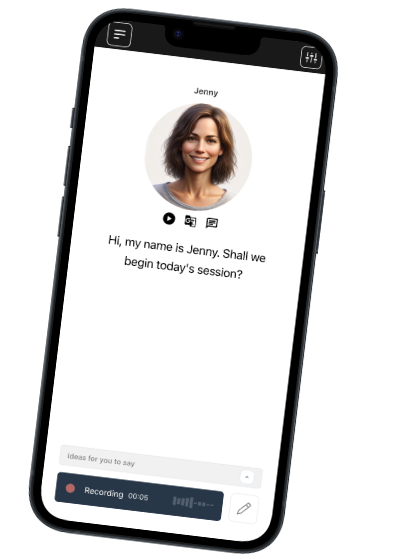
Talkio is the ultimate language training app that uses AI technology to help you improve your oral language skills!
Try Talkio